Birds, Leps, Observations & Generalities - the images and ramblings of Mark Skevington. Sometimes.
Showing posts with label British Tick. Show all posts

Sunday, 11 June 2023

Lucky Man ...

Last night I was invited to join Margaret McLoughlin and Graham & Anona Finch out for some light trapping at a private site in Charnwood that the Loughborough Naturalists' Club has been surveying. The forecast was looking good anyway, and it certainly turned out to be an excellent night in many ways. I ran a 125W MV over a sheet and 2x 125W MV traps. And my new car is delayed so the pseudo-Uber got another run across terrain it wasn't built for.


The sheet was quite quickly alive with tiny diptera, caddisflies and an assortment of tiny beetles. But a few early swifts aside, moths were a bit slower to get going. I'll come back to the catch, but first a backstory ....

Whilst setting up, Graham (who you may recall is the VC55 Coleoptera Recorder) had pointed out to me a free-standing dead birch trunk which he suggested I should have a look at after dark. On this same tree last year, he'd found literally dozens of the beetle Corticeus unicolor, the first VC55 record of Colydium elongatum and other interesting beetles. Once the lights were on and dusk had just about phased into night, I went to have a look. Sure enough, exactly as explained, I found plenty of Corticeus unicolor - a new beetle for me.


I also found Mycetophagus quadripustulatus (one I ticked at the end of May) and what I am sure is Triplax russica (black scutellum).


All of these where on and around Hoof Fungus [Fomes fomentarius]. But on the trunk close by was another interesting beetle, Megatoma undata.

I let Graham know what I'd seen, although it became apparent that I'd actually checked a different (but equally interesting) dead birch. The one I checked was close to the footpath, though the trunk was a bit boxed in by bracken and bramble. A bit later when I went to have another look, I found the tree that Graham had originally meant which was just set back a bit from the path. Pretty much the same story with masses of Corticeus unicolor, and amazing to see the fungal spores drifting off into the night. But right in front of me on the lip of the 'hoof' was a completely different beetle, and one that did not ring any bells or look familiar. I grabbed a shot in situ and potted it up. I was sure Graham would recognise it. I showed Graham the photo; he immediately recognised it was interesting, was sure he'd not seen one and wasn't sure what it was. He was all the more pleased to hear I had it potted, and I was more than happy to pass it on so Graham could do his magic on carding and imaging it. I decided to do a quick Google in the woods, and later in the night let Graham know what I though it was - albeit that couldn't be right. Anyway, here is my not so great shot of it in-situ on the fungus (in pitch black using my TG-6).


Anyways, I reckoned it was a perfect match for Bolitophagus reticulatus, but noted that the distribution for that seemed to be limited to the Scottish highlands. Must be something similar and commoner? When I got home much later, a quick check in Duff .... can't see that there is anything similar. Graham let me know he was in agreement on the ID. I posted it to the Beetles of Britain and Ireland FB site - no alternative IDs offered. So there you go, new for me, new for VC55 and it appears new for England! I'm sure a first for England is not really recognised or notable but, you know, I'll take it anyway.

The fungus is pretty common in Charnwood, and appears to be present continuously throughout between Leicestershire and the highlands and pretty much everywhere else too. The beetle also appears to have been recorded in mainland France, Poland etc. It therefore seems very likely that it is indeed present wherever the fungus is - though how it would have evaded detection until my random lucky encounter I have no idea.

Right, back to the sheet. There were far more non-lepidopteran 'intruders' than I've seen so far this year. I pointed the camera at one or two caddisflies, one of which I've not seen before.

Phryganea bipunctata

As for the moths I ended up with 351 of 94sp. + 3sp. for dissection, not a bad total at all though not really anything too exciting. I know Graham is already at c110sp, from his x4 traps, and I know Margaret had a few bits I did not get from her x2 traps so I am sure the overall total for the night will be pretty strong. Margaret absolutely had the main moth highlight, one I was delighted to see ....

Rosy Marbled

Sunday, 22 January 2023

Life in the land of the dead

Been far too busy/lazy of late to post, mainly because I've been far too busy/lazy to have anything to post about. This weekend for instance, the first weekend for a while where the conditions have been crisp and cold rather than miserably wet, I could have sauntered literally a couple of miles down the road to look for an over-wintering Yellow-browed Warbler (not Hume's) with a Hen Harrier loitering around the same area. Could not be arsed. Absolutely no motivation to get some boots on. It can't go on like this of course, and I'm sure a glimmer of lengthening days and increased opportunities will coax me out of this winter malaise.

I did have a minor effort today though, just by sticking the camera in the car to take on a short errand to stock up on fat balls. I dropped past the old churchyard in Blaby and had a nose around on the stone walls and gravestones for half an hour which turned out to be surprisingly productive.

For some reason I'd never seen Juniper Shieldbug, but here there were six brazenly sitting out on top of gravestones despite the temps barely being a couple of degrees above freezing. Pretty sure no Juniper anywhere around, but certainly some Lawson's Cypress or cultivars.

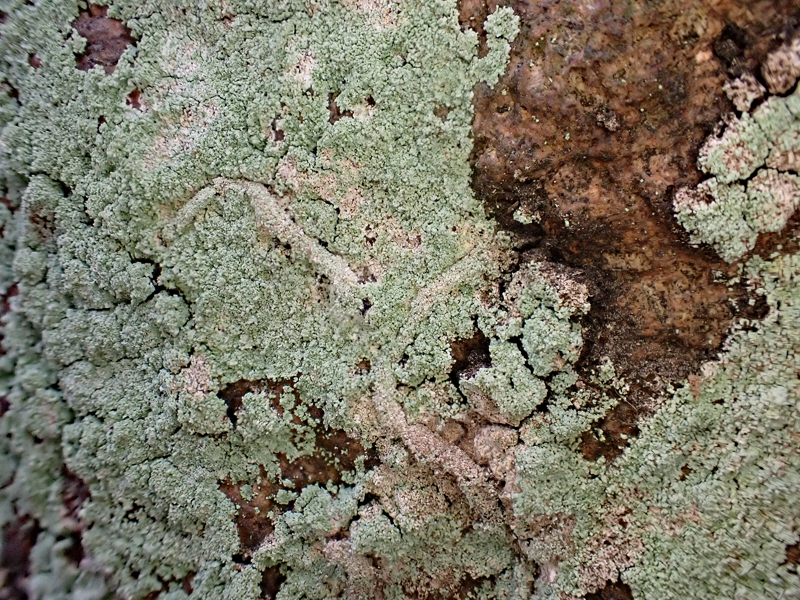
A search of the stone walls around the church and algae/lichen covered brick walls on the adjacent lane soon revealed a number of Psychidae cases. Narycia duplicella and Luffia lapidella (f. ferchaultella) were certain, but a few cases looked a bit more Dahlica-like. I'll go back and have a longer better look another time. But even better, a patch of granular grey-green lichen [Lepraria sp.] held the inconspicuous larval tubes of Infurcitinea argentimaculella. Good to find this well away from all other VC55 records to date (Charnwood). The photos are not exactly exciting, and these were on the shaded side of the wall in what were already dull conditions so a bit 'fuzzy'! Still you get the gist.

Here's an absolute racket that I recommend you play at ear-bleeding volume; its enough to wake the dead.

Wednesday, 28 September 2022

Bagging a Midget

I'm not referring to some below average height Monarch. Last Friday evening a local recorder Hazel Graves posted some leaf mines on our VC55 Facebook group that she believed to be Phyllonorycter pastorella. I confirmed that these did indeed look right, that there were no previous VC55 records and that this was a species only added to the British List in 2014. The post did not give any details for the record at that point. Given that it was a likely VC55 first I suggested posting to the British Leafminers group for confirmation, whilst also asking for the details.

By early afternoon on Saturday, I'd not seen a response and so decided to go out and have a nosey around at a likely site. I figured the Soar Valley was as good a place to check as any, but I was short on time so needed somewhere I could park up and check out quickly. Narborough Bog and Everard's Meadows are closer to home but would need a bit of a walk before hitting likely prime habitat, whereas Aylestone Meadows is a little further but I could be searching within a couple of minutes of parking up. So off I headed, and literally five minutes after parking I found mines on a big hybrid crack willow of some sort. I carried on searching and within half an hour or so I'd found it at three spots alongside the canal, all in the same tetrad and all on long-leaved crack willow type trees. Whilst I was out, Hazel posted some details: actually found the previous weekend at - Aylestone Meadows, albeit further north closer to the King Power stadium but within the same tetrad as those I found. Confirmed by Rob Edmunds.

I collected a handful of mines in the hope I'd find one tenanted. I ended up with a couple tenanted with fresh pupae intact, and a couple vacated. Here's an example showing the relatively large mine with a single crease and feeding marks on the upper surface:


When backlit, the pupa is visible in the mine laying pretty much parallel to the crease, with all the frass piled up at the other end.

I was confident that one would emerge fairly soon, and have been checking them every morning, late afternoon and again before going to bed. Last night, I found one had emerged at some point during the evening ....

Phyllonorycter pastorella - needless to say a new moth for me

Not a typical shiny Phyllonorycter with white streaks and strigulae, but quite smart all the same. I mentioned this being added to the British List in 2014 - that was when mines were found in the grounds of Buckingham Palace. Hence the daft (unused) vernacular Royal Midget. Since the weekend, after alerting other leaf mine recorders, it's been found near to Burbage which is much further south and well away from the first site. I suspect this will turn out to be fairly well spread and established within a year or two.

I also found some mines on Ash at last after having had a blind spot for them for a long while, and then found more on Sunday during a bit more square-bashing.

Cone and vacated cocoon within of Caloptilia cuculipennella at Aylestone Meadows

Early-stage leaf mine of Caloptilia cuculipennella at Stapleton

Blotch mines of Gracillaria syringella at Stapleton

Thursday, 25 August 2022

Gin Trap

I had a momentous bit of mothing luck on Tuesday. I'd left the NI lure (Trichoplusia ni) out in the pheromone trap on Monday night; on checking it early on Tuesday morning after emptying the light trap, there was just a single Silver Y and absolutely nothing else. I was short of time, so just left the pheromone trap with lure still in place lying in the garden. Come early evening when I was about to set-up the light trap again, I picked up the pheromone trap to sort it out and was surprised to see a tiny moth jumping around inside it. I knew that whatever it was, it would need potting before I'd have any chance of identifying it. So, indoors with the trap, pot grabbed and I successfully captured said moth. Too small to see what it was, but it looked tortrix-ish. Grab an eye lens and - wow - that is one very smart tortrix that I didn't immediately recognise but knew which candidates to look at. Not long afterwards, I'd realised that it wasn't any of the obvious candidates and alarm bells started ringing about a new species that was recently being caught. A quick trawl around Facebook groups and Twitter and I got it sorted - Pammene juniperana. I knew that would be not only new for me and VC55, but perhaps of National significance. I risked nothing more than an in-the-pot-shot before getting news out on relevant FB groups.


This was new to Britain in Berkshire in 2018. This year, there have been further records in Berkshire (2nd & 8th?), Hertfordshire (3rd & 4th), Oxfordshire (5th) and Essex (6th & 7th?). Mine is perhaps the 9th, but more importantly it is quite geographically disparate to the others. It seems likely this is a recent colonist; it is a Juniper feeder, and quite likely it will be making use of cultivated Junipers too. There is no native Juniper in VC55, though it has been planted at a couple of sites at least.

I remembered yesterday that a long while ago I bought a photography diffuser 'tent' which I always found to be a pfaff to use with my previous photography set up. But using it would mean a good chance of a half decent shot out of the pot with a much reduced risk of losing it, especially with the handheld TG-6. So I gave it a go ....


.... not too shabby, but still not as spanking as in the flesh! This is pretty tiny for a tortrix, just a shade under 4mm wing-length.

I am now certain about the ID personally, though others have - apparently - been initially mis-identified as Cydia cosmorphorana, To my eye the similarity is superficial (perhaps less so on a worn individual), and C. cosmorphorana is usually a couple of mm bigger. Either way with it being such a 'new' UK species and still potentially of National significance I'll get it gen detted as a formality. I suspect that in due course this will be another tortrix that is shown to be relatively well distributed through pheromone lures: I know that one of the Essex records was to the NIG (Cydia nigricana) lure, and one of the Berkshire records to the ARG (Pammene argyrana) lure.

post-script: confirmed male Pammene juniperana by gen det as expected

I could have picked Jennifer Juniper by Donovan as the track for this post, but that would be like selling my soul (again). So here is a more esoteric Juniper-themed track.

Monday, 1 August 2022

Faith, Healed

Ok, so I got the final outcome from the consultants at a post-op follow up last Friday with Nichola. Bottom line - no discussions about how long I've got and no further treatment; lymph nodes clear and resection margins microscopically clear (r0) so essentially I am cancer-free and can get on with planning and living my life like anyone else. No guarantees of course, although ongoing surveillance for five years is reassuring, but it's absolutely the best outcome I could have hoped for. Just got to get on with physical recovery, though I'm feeling a bit stronger every day and from today I'm logging on to work for a while to get back on top of things.

I'm also taking on the VC55 CMR role formally from hereon in. I've been covering the role since Adrian's passing, but of course was hesitant to formalise anything too quickly and whilst I had my own health cloud. There is much to do, initially just to get a grip on a few things.

I ran the garden trap for a couple of nights before the weekend, and picked up x3 new micros in the process - one of which was completely new to me. Ironically though, the first new micro was almost overlooked.

From 28/07/2022 there were x2 Brown-line Bright-eye in the trap that I couldn't remember having here before, and x2 Caloptilia semifascia that has been turning up in gardens regularly over the last couple of years or so. It didn't remotely click that mine wasn't one of them. It was only when checking for last dates that the penny dropped, and thankfully I'd potted both to ensure a photo anyway. Turned out that after all I had recorded Brown-line Bright-eye here before - albeit way back in 2000 & 2003.

Caloptilia semifascia - garden tick

Worn but welcome Brown-line Bright-eye - not a garden tick!

The following night, another couple of micros that this time I knew were new ....

Caloptilia cuculipennella - new for me and the garden

Nephopterix angustella - seems to be having a good year locally


"All you've got to do is feel, your body's going to start to heal,
Fingertips of holy fire, everlasting sweet desire,
It don't matter what the doctors say, Healer man, sail away,
Immortality for two, miracles will come to you.
The faith healer, the faith healer"

Monday, 24 January 2022

Tackle Ticks

I finally had the tackle of a number of specimens from the summer and early autumn checked out by Andy Mackay, which confirmed new for garden species and a couple of surprises:

Endothenia marginana

Endothenia oblongana - a full blown tick for me, and only the 4th or so VC55 record (all recent)

Cnephasia genitalana - proving that it is worth getting individuals checked through the season

Dichrorampha flavidorsana - another British tick

Apodia bifractella

Adaina microdactyla

I've also realised that this one appears to have slipped through without being mentioned in the blog: Gelechia sororculella, a tick for me and only 2nd VC55 record.


Here's post-Clash blast from quite a long while ago ....

Wednesday, 5 January 2022

Anser plasticus

Back in November, the BOURC decreed that Ross's Goose was now accepted fully onto the British List. This was on the basis of re-revaluating historical records and concluding that one in Lancs. over three consecutive winters between 1970 and 1974 was coincident with a rapid population expansion for this species in the Nearctic, and that there is clear precedent for Nearctic wildfowl trans-Atlantic vagrancy.

Clearly this generated a lot of excitement in the birding community on Twitter - an armchair tick loomed, and for a good many of those the expectation was that a first-winter bird at Wighton in Norfolk in November 2001 would subsequently make the grade when re-assessed by the BBRC. Here's a screenshot from this webpage on Birdguides (from 2004 as far as I can see) which includes a photo of the said bird:

I saw that bird too, but as with many such sightings of 'untickable' species it isn't in my records. I needed to dig about in the loft, find my old notebooks and check the date. I also don't really remember much from around that time due to life events that happened a couple of months before and a month afterwards: I was working in aerospace engineering when the Twin Towers were destroyed, with an immediate impact on work contracts and exports, and then two days before Christmas my Dad was killed in a car crash. 2001 started so brightly with my eldest son Josh being born and ended up a complete shitstorm (with the Foot and Mouth disaster thrown in).

Anyway, I finally got around to digging out the old notebooks tonight and indeed found the detail I was hoping for.

Around the same time as the Goose turned up, there was an oiled first-winter Snowy Owl dossing about Felixstowe docks. I'd already been over to try and see that on a weekday evening but failed, so on Sat 17/11/2001 I headed back over there with John Hague in tow. We duly saw the bird, which was unmemorable but far from the majestic beast that you regularly see delivering post to Harry Potter on the telly. From there we headed across East Anglia to Wighton and watched the skanky-looking dwarf snow goose feeding with Pink-footed Geese. Then on to Titchwell to round off the day, where amongst a decent list of waders, wildfowl and raptors we also saw a first-winter Gull-billed Tern. Basically it was a day of unsustainable road usage looking at first-winter birds that should be more white than they were, most of which I'd completely forgotten about until reading my barely legible childish scribble.

I saw this bird just over twenty years before the species was added to the British List; I'll hold fire on adding it to mine until the 2001 Norfolk individual has been declared 'good'. In the meantime, I fully expect that the only other Ross's Goose that I've seen will continue to be declared a plastic bag of ....

Clearly sporting a wedding band rather than a Nearctic 'band'

The same bird in March 2012 looking more regal and acceptable due to lack of visibility of its legs ....

Sunday, 12 September 2021

Visions in Blue

The garden trap had an outing on Friday night. I checked it before going to bed, and whilst there were a good number of moths around and about there was nothing too exciting. So come Saturday morning, certainly not at the crack of dawn as I was late getting out of bed, I was blearily scanning around the walls, fence and sheet and then the eggboxes around the outside of the trap. I duly recorded everything as it came into focus, and eventually I was ready to get onto the trap contents.

A good habit I've developed over the years is this: every egg tray that I carefully lift out gets quickly scanned on the upper surface first and anything vaguely interesting is mentally noted. I then turn the tray and record that side first - it just means that the moths that inevitably fly off quickly have just about all been seen and I hopefully won't have missed anything.

So first tray out, a quick scan - nothing exciting. Turn the tray - very loud expletives that at that time of the morning almost certainly got the attention of neighbours ....


I could not believe it - and there was absolutely no doubting the ID despite having never seen one. Right before me was a huge Clifden Nonpareil (I refuse to adopt the 'Blue Underwing' tag). I just wasn't ready for it and quickly but carefully put the tray back in the trap and the funnel back in place, and then anxiously went in and fetched a large cardboard pot and my phone for the camera.

I grabbed a couple of quick shots. It was clearly a bit tired to say the least, with balding thorax and a nic in the right forewing, but I couldn't care any less - it was absolutely fucking awesome. I really wanted to see the electric blue hindwing band, but equally I wanted to secure the moth in the pot. As it happened, the first gentle nudge with the pot caused it to flap open - another quick shot (and yet more evidence of its fatigued state).


I then managed to get it - just about - into a pot. It was a tight fit to say the least. I then closed up the trap and spent then next 20mins or so shaking my head in disbelief and posting my quick shots on Facebook. I did get around to emptying the trap, though there was nothing else anywhere near as exciting (unlike another VC55 recorder the previous night who thought he'd struck gold with a Clifden, only to then find a Beautiful Marbled in the same trap!).

Later in the day I tried to get proper camera shots, but it just didn't want to play ball and after a couple of minutes launched into flight around the garden like a Vulcan bomber. It wasn't quite warmed up enough though so ditched into what is left of our lawn briefly before finally heading off never to be seen again.


The name Clifden Nonpareil alludes to the place of the first British records (Cliveden, in Berks) and nonpareil approximately translates in context to 'without equal' or 'beyond compare'. VC55 has started getting a decent spread of records, and mine was the 7th so far this year. It's more than possible that I'll see another here in the next few years, and we've had the first larval record this year too.


More standard fare included these from the light, medium and dark ranges ....

Pale Mottled Willow

Brown-spot Pinion

Black Rustic


The garden itself is looking about as battered as the Clifden ....

Work has started at long last. The bloke doing it for us somehow managed to get a mini digger into the garden and in no time at all managed to uproot everything, demolish the low walls and create a massive hole to be filled with rubble to give much needed drainage. A concrete base for our new shed is marked out, and we'll have a much bigger patio area before raised beds go in and a new lawn. It's going to take a while before we've got a splendid looking space, but at the bottom end of the garden I'll be creating refuge and habitat for inverts and a raised pond of sorts.