Birds, Leps, Observations & Generalities - the images and ramblings of Mark Skevington. Sometimes.
Showing posts with label Riponnensia splendens. Show all posts

Sunday, 21 June 2020

Par(helophilus) For The List

It's been a quiet weekend on the poking around for inverts front. Too much time spent catching up on some Zs or watching football that is lacking excitement and atmosphere. Yesterday I managed to nip out for the briefest of brief forays to Misterton Marsh, south of here on the way to Lutterworth. I'd been there all of 30mins when the threatening skies just started to offload water.

Still, all in all though it was a successful 30mins as I managed to sweep another hoverfly tick from umbelifers. I knew immediately that it was one of the Parhelophilus spp. - smaller and darker overall than Helophilus, almost browny-orange rather than yellow looking. It was potted and retained to check which one and what features to confirm. When checking the book, it was clear I'd need to look at a feature on the hind femora, and there was no way that was going to happen whilst it was flapping about in the pot and the feature would not show on a typical photo either. Sorry fly, again! Before dispatching it though, I was able to check and confirm it was male - otherwise it would have been pointless as the key feature to separate the two main contenders is a male-only feature. The eye-spacing on these spp. is not the same as most hoverflies so despite the eyes being spaced apart, this is a male (per the large genital capsule on the undercarriage).

This hairy tubercle on the underside and near the base of the hind femora is key, confirming Parhelophilus frutetorum
(vs P. versicolor which does not show it).

I managed to photograph a couple of other hoverflies on umbelifers too before the shower.

Cheilosia illustrata - several of these seen.
They're hairy, black and white like bumbling Pandas on the flower heads.

Riponnensia splendens - now I know what I'm looking at, they seem to be fairly common

Other bits seen included ....

Early-instar Cinnabar larvae

Loads of Leptopterna dolabrata

Not only have I used the new editor, I've managed (so far) to produce this post using the new Microsoft Edge browser which installed itself on my PC with the last update. I stopped using Internet Explorer for blogging a few years ago as there seemed to be compatibility issues. Firefox has been fine, and I'll probably still use it unless I start to notice any advantages whilst using Edge for other applications.

Wednesday, 17 June 2020

Pot Luck!

Remember I mentioned that I nipped out for a walk on Sunday afternoon, after a day of heavy showers. I took no net, but managed to pot by hand a selection of diptera, sawflies and one ichneumon from umbelifer flowers. Turned out to be a bit of pot(ting) luck in all respects; of the six specimens that I selected for pinning, five are new to me. One of those may even be new for VC55.

I can't claim any credit for the ID of this Tachinid, I had a wild guess and Chris Raper promptly put a better name to it ......


This is Linnaemya picta, only added to the British list in c2008 and has been spreading with a big surge in the last year or so. Can't see any dots for VC55 on NBN Atlas maps ....

Some of the facial bristles are key to separating from Linnaemya tessellans.

The other dipteran tick was this small-ish hoverfly, Riponnensia splendens. The facial dusting, metallic bronze thorax and dull mat stripe along the abdomen, along with size at c7mm, separate it from similar species.


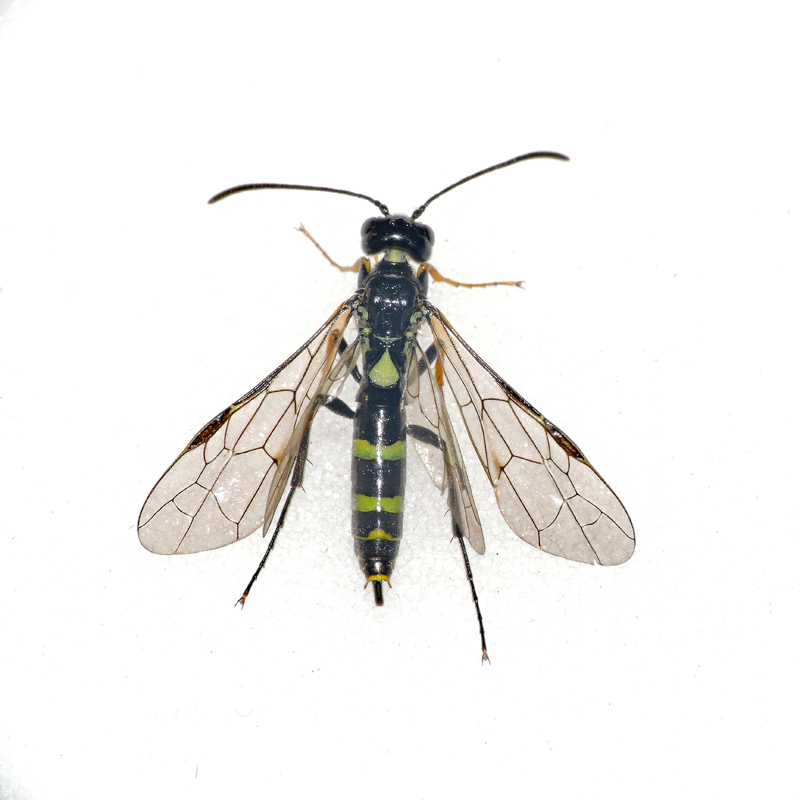
A couple of sawfly ticks were these ....

Arge melanochra
Hind femur black and black smudge at the stigma not across wing help separate from the ubiquitous Bramble Sawfly (Arge cyanocrocea)

Cephus pygmaeus
Antennal segments thickened towards tip, bifid claws, hind tibia dark (not yellow) help separate it from Cephus spinipes

Finally an ichneumon that looks great, like many do, only to find it could be one of several species. However concensus reached that it is Ichneumon suspiciosus based on antennal characters, notably the antennal tyloids on segments 7 to 15.