Birds, Leps, Observations & Generalities - the images and ramblings of Mark Skevington. Sometimes.
Showing posts with label Epinotia nisella. Show all posts

Thursday, 13 July 2017

Where's the Mugwort ...

Had a nice tortrix in the trap on Monday night, one of my favourites in fact, but I've only just got around to grabbing a quick shot. I knew I'd had several before, though it felt like a while since I'd last seen it so I checked my records. I was surprised to find that I'd had it annually between 2000 and 2008 with a total of 24 individuals, then two in 2010 but none since. It feeds on Mugwort ... so where has all the Mugwort gone from around here in the last seven years! Certainly an odd pattern of records. This one also had an odd broken white 'U'.

Epiblema foenella

Last night also brought some tortrix interest.

Eudemis profundana

Another possible Epinotia cinereana?
post-script - confirmed as Epinotia nisella by gen. det.

And amongst the tubes of specimens I've saved for formal gen det I've got another Acleris - although this one is almost certainly A. laterana.

Post-script - confirmed as Acleris laterana by gen. det.

And whilst I'm posting torts again, here's one that's also got an odd pattern of records in my garden/ I had a few (6 individuals) between 2000 - 2005, then none until 6 individuals between 2010 - 2016. So far I've had 3 this year alone.

Cyclamen Tortrix

Thursday, 6 July 2017

More New Torts?

Just a couple of days after adding Epinotia signatana to the garden list, and I now have another two interesting looking torts that will need formal det and are likely to be garden firsts.

One from 04/07/2017 is possibly Epinotia cinereana - a relatively new split having been previously considered as a form of Epinotia nisella. I've got a few garden records of E. nisella in July, although all from mid-July onwards and none this early in the month. Doubt I've seen the as-was E. nisella f. cinereana before - think all my records would be of the classically marked forms. Currently appears to be no formally confirmed records of E. cinereana from VC55.

Putative Epinotia cinereana - gen det pending
Post-script - confirmed (sadly!) as Epinotia nisella by gen. det.

The other one from last night is something else altogether. It's big (c24mm wingspan), and so worn that really I have no firm idea as to what it could be, although the apparent trace of a reticulated pattern with a couple of darker areas, along with the orangey/yellow head, are reminiscent of the recent adventive Gravitarmata margarotana. One that will need a get regardless!

A big bald tortrix
post-script - confirmed as Lozotaeniodes formosana by gen. det.

Otherwise, here's a few recent micros to fill the post up ....

Argyresthia brockeella

Tinea trinotella

Oegoconia quadripuncta - confirmed by gen. det.

Carcina quercana

Brachmia blandella

Caloptilia stigmatella

Monday, 8 August 2011

Some Moths, and Memory Lapse

First up, here's the summary from the last garden trap outing on 05/08 - haven't bothered since for various reason including apathy, fatigue and uninspiring conditions.

Total catch 291 of 71sp.
(125W MV 145 of 50, 22W/18W Synergetic/CFL combo 146 of 46)


First for year in garden:
0819 Scrobipalpa costella 1
2134 Square-spot Rustic (Xestia xanthographa) 1


Highest counts:
2111 Lesser Broad-bordered Yellow Underwing (Noctua janthe) 37
2343x Common Rustic agg. (Mesapamea secalis agg.) 37
1304 Agriphila straminella 17
1713 Riband Wave (Idaea aversata) 16
2109 Lesser Yellow Underwing (Noctua comes) 13
2321 Dark Arches (Apamea monoglypha) 13
1331 Water Veneer (Acentria ephemerella) 11
1036 Acleris forsskaleana 10
1937 Willow Beauty (Peribatodes rhomboidaria) 10

Best of the rest:
0987 Ptycholomoides aeriferanus 1
1236 Pammene fasciana 1
1497 Amblyptilia acanthadactyla 3
1738 Common Carpet (Epirrhoe alternata) 5
1777 July Highflyer (Hydriomena furcata) 1
1825 Lime-speck Pug (Eupithecia centaureata) 2
1835 White-spotted Pug (Eupithecia tripunctaria) 1
1838 Tawny Speckled Pug (Eupithecia icterata subfulvata) 1
1883 Yellow-barred Brindle (Acasis viretata) 1
1981 Poplar Hawk-moth (Laothoe populi) 1
2044 Dingy Footman (Eilema griseola) 1
2047 Scarce Footman (Eilema complana) 1
2112 Least Yellow Underwing (Noctua interjecta caliginosa) 1
2293 Marbled Beauty (Cryphia domestica) 2
2384 Vine's Rustic (Hoplodrina ambigua) 1
2441 Silver Y (Autographa gamma) 1

Ptycholomoides aeriferanus

Epinotia nisella

Silver Y, very small (about half normal side) and therefore a presumed f. gammina
Note how I have measured it with a very precise instrument calibrated to National Standards in a thermally conditioned UKAS accredited lab ...... no, it's not a childs ruler .... how very dare you

Silver Y

Lime-speck Pug


Now then, every year we I seem to make subjective comments based on nothing more than perception that it is a fantastic, good, bad, shite month/year for moths in the garden. This happens especially in July - mainly because I do expect to have a lengthy task every morning emptying the masses from the egg trays. This year, my perception was that it was a relatively poor year. Now the month is gone, and the records are up to date, I decided to check just how bad it was.

A key constraint for me in comparing one year to the next is that I do not run the garden traps in any sort of regimented frequency. So, the number of trap nights varies both dependant on the prevailing conditions and my availability. Ironically, in a good year I am more likely to be out and about at every opportunity and therefore not running the garden traps. I also have parental duties and family committments after mid-July when the schools shut up shop for the summer. The other factor is that prior to late summer 2007 I ran a single 125W MV trap. Since then, I have tended to run two traps - a 125W MV and some additional actinic, combo or other to compliment it. This means (in theory) that I have increased the potential for attracting greater species diversity and higher numbers. So, I started gathering the data to compare year to year based on the average number of species and individuals rather than the totals outright. I plotted the data for 2000 but left it out from the averaging as I am sure I ignored a lot of things that I couldn't identify at that point.

A quick check to see how bad 2011 was .....

Oh .... Seems I had completely forgotten that 2007 was in fact so poor that opportunities to run the garden traps in between rainy spells were few and far between indeed. I checked back and found e-mail correspondence remarking about how completely rubbish and depressing July 2007 was. In fact the mothing in July that year was so bad that I had to omit it from the averaging to avoid skewing the data too much.

Digging further, I found that 2011 was indeed poorer than 2010 for species, though not as bad as I thought for numbers. I also found that 2010 was actually a good year (in fact the best to date). This then means that 2011 wasn't that bad after all. So much for the perception.

Here are some charts for you to glance at, scratch your head and wonder WTF I am doing wasting my time on such trivial nonsense. First, the comparison of the averages and then the outright totals so you can see what a difference it makes to the analysis (such as in 2005, when I was unable to trap as frequently hence reduced overall totals but good averages). I use the term analysis, but what I actually mean is unscientific and statistically unsound comparative wibble. I have split the multi-year average line to account for the change in number of traps, my inexperience in 2000 and the utter shiteness that was 2007.


Friday, 5 August 2011

Long over-due mothing update

I have at long last overcome the now regular summer MapMate malaise and have finally got the mothing records up to date (though the traps are out again as I type so I'm only up to date for a few hours!). Here are the headline summaries for the garden just before and after the Devon weekend:

28/07/2011
Total catch 358 of 81sp.
(125W MV 143 of 56, 22W/18W Synergetic/CFL combo 215 of 60)


NEW FOR GARDEN:
0401 Argyresthia laevigatella 1
1804 Barred Rivulet (Perizoma bifaciata) 1

First for year in garden:
0015 Orange Swift (Hepialus sylvina) 2
0363 Phyllonorycter platanoidella 1
0366a Cameraria ohridella 1
0602 Elachista apicipunctella 1
0695 Agonopterix alstromeriana 1
0993 Cyclamen Tortrix (Clepsis spectrana) 1
1016 Cnephasia longana 1
1197 Eucosma campoliliana 1
1260 Cydia splendana 2
1309 Agriphila geniculea 1
1838 Tawny Speckled Pug (Eupithecia icterata subfulvata) 2
1919 Purple Thorn (Selenia tetralunaria) 1
2112 Least Yellow Underwing (Noctua interjecta caliginosa) 1


Highest counts:
2343x Common Rustic agg. (Mesapamea secalis agg.) 49
2321 Dark Arches (Apamea monoglypha) 32
1713 Riband Wave (Idaea aversata) 25
1293 Garden Grass-veneer (Chrysoteuchia culmella) 18
1424 Endotricha flammealis 16
1304 Agriphila straminella 11
1036 Acleris forsskaleana 10
1439 Trachycera advenella 10

Best of the rest:
0125 Emmetia marginea 1
0878 Batrachedra praeangusta 3
1038x Acleris laterana/comariana 3
1378 Phlyctaenia coronata 1
1417 Meal Moth (Pyralis farinalis) 1
1470 Euzophera pinguis 1
1651 Chinese Character (Cilix glaucata) 1
1811 Slender Pug (Eupithecia tenuiata) 3
2044 Dingy Footman (Eilema griseola) 4
2293 Marbled Beauty (Cryphia domestica) 2
2297 Copper Underwing (Amphipyra pyramidea) 1


31/07/2011
Total catch 467 of 72sp.
(125W MV 176 of 44, 22W/18W Synergetic/CFL combo 291 of 59)


First for year in garden:
Nothing!

Highest counts:
2343x Common Rustic agg. (Mesapamea secalis agg.) 84
1304 Agriphila straminella 28
2321 Dark Arches (Apamea monoglypha) 27
1713 Riband Wave (Idaea aversata) 25
2109 Lesser Yellow Underwing (Noctua comes) 25
1036 Acleris forsskaleana 23
1439 Trachycera advenella 22
2111 Lesser Broad-bordered Yellow Underwing (Noctua janthe) 20
1424 Endotricha flammealis 18
1293 Garden Grass-veneer (Chrysoteuchia culmella) 12
0647 Brown House Moth (Hofmannophila pseudospretella) 11
1138 Epinotia nisella 11

Best of the rest:
0411 Argyresthia goedartella 1
1016 Cnephasia longana 1
1313 Catoptria pinella 1
1452 Phycita roborella 1
1742 Yellow Shell (Camptogramma bilineata) 5
1811 Slender Pug (Eupithecia tenuiata) 1
1883 Yellow-barred Brindle (Acasis viretata) 1
1884 Magpie Moth (Abraxas grossulariata) 1
2044 Dingy Footman (Eilema griseola) 1
2064 Ruby Tiger (Phragmatobia fuliginosa) 1
2112 Least Yellow Underwing (Noctua interjecta caliginosa) 4
2293 Marbled Beauty (Cryphia domestica) 2
2297 Copper Underwing (Amphipyra pyramidea) 1
2384 Vine's Rustic (Hoplodrina ambigua) 1


01/08/2011
Total catch 503 of 87sp.
(125W MV 261 of 71, 22W/18W Synergetic/CFL combo 242 of 51)


NEW FOR GARDEN:
0360 Phyllonorycter kleemannella 1
(Actually this may well be a VC55 first aswell!)

First for year in garden:
0284 Caloptilia rufipennella 1
1113 Eudemis profundana 1
1126 Ancylis badiana 1
1348 Ringed China-mark (Parapoynx stratiotata) 1
2452 Red Underwing (Catocala nupta) 1


Highest counts:
2343x Common Rustic agg. (Mesapamea secalis agg.) 71
1304 Agriphila straminella 58
2111 Lesser Broad-bordered Yellow Underwing (Noctua janthe) 28
2321 Dark Arches (Apamea monoglypha) 24
1036 Acleris forsskaleana 22
2109 Lesser Yellow Underwing (Noctua comes) 22
1439 Trachycera advenella 20
1713 Riband Wave (Idaea aversata) 18
0263 Apple Leaf Miner (Lyonetia clerkella) 16
1138 Epinotia nisella 16
1424 Endotricha flammealis 16
0647 Brown House Moth (Hofmannophila pseudospretella) 12
1293 Garden Grass-veneer (Chrysoteuchia culmella) 11

Best of the rest:
0015 Orange Swift (Hepialus sylvina) 1
0266 Bucculatrix nigricomella 1
0363 Phyllonorycter platanoidella 1
0366a Cameraria ohridella 2
1415 Orthopygia glaucinalis 1
1452 Phycita roborella 1
1497 Amblyptilia acanthadactyla 1
1742 Yellow Shell (Camptogramma bilineata) 1
1777 July Highflyer (Hydriomena furcata) 1
1811 Slender Pug (Eupithecia tenuiata) 3
1884 Magpie Moth (Abraxas grossulariata) 2
2011 Pale Prominent (Pterostoma palpina) 1
2064 Ruby Tiger (Phragmatobia fuliginosa) 1
2110 Broad-bordered Yellow Underwing (Noctua fimbriata) 1
2112 Least Yellow Underwing (Noctua interjecta caliginosa) 4
2145 Nutmeg (Discestra trifolii) 1
2293 Marbled Beauty (Cryphia domestica) 2
2297 Copper Underwing (Amphipyra pyramidea) 1


03/08/2011
Total catch 263 of 59sp.
(125W MV 106 of 39, 22W/18W Synergetic/CFL combo 157 of 46)


First for year in garden:
1842 Plain Pug (Eupithecia simpliciata) 1
1913 Canary-shouldered Thorn (Ennomos alniaria) 1
2123 Small Square-spot (Diarsia rubi) 1


Highest counts:
2111 Lesser Broad-bordered Yellow Underwing (Noctua janthe) 33
2343x Common Rustic agg. (Mesapamea secalis agg.) 32
1304 Agriphila straminella 18
2321 Dark Arches (Apamea monoglypha) 16
1424 Endotricha flammealis 15
1439 Trachycera advenella 14
1331 Water Veneer (Acentria ephemerella) 11
2109 Lesser Yellow Underwing (Noctua comes) 11

Best of the rest:
0015 Orange Swift (Hepialus sylvina) 2
0411 Argyresthia goedartella 2
1113 Eudemis profundana 1
1316 Catoptria falsella 1
1497 Amblyptilia acanthadactyla 1
1742 Yellow Shell (Camptogramma bilineata) 2
1825 Lime-speck Pug (Eupithecia centaureata) 1
2030 Yellow-tail (Euproctis similis) 1
2112 Least Yellow Underwing (Noctua interjecta caliginosa) 2
2293 Marbled Beauty (Cryphia domestica) 3
2297 Copper Underwing (Amphipyra pyramidea) 3


I haven't done too much photography lately either, though I grabbed one or two earlier this evening. The main disappointment on that front was losing the Plain Pug in the kitchen - a bit of a bugger that one as it's only the second I've ever seen, the first being from the garden way back in July 2000 before I had a digital camera. I need to have another go at photographing the Phyllonorycter kleemannella aswell.

Orthopygia glaucinalis

Anclyis badiana

Epinotia nisella

And here's a few hoverflies from the garden on Wednesday evening - loads of Episyrphus balteatus knocking about at the moment, and also a fair few of what I think are Eupeodes corollae (I may well be wrong on that one though!).

Pied Hoverfly - Scaeva pyrastri

Migrant Hoverfly - Eupeodes corollae

Marmalade Hoverfly (shit vernacular name) - Episyrphus balteatus

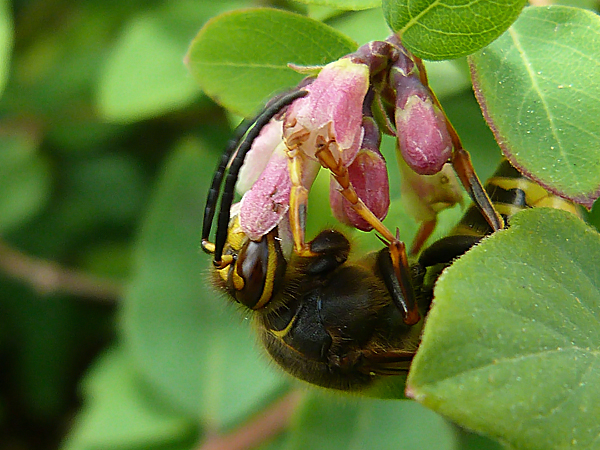
Also noticed Median Wasps building up again nectaring, like this one face deep in whatever the bush is that is really good for bees, wasps and hoverflies (must find out what it is exactly).

Median Wasp