Birds, Leps, Observations & Generalities - the images and ramblings of Mark Skevington. Sometimes.
Showing posts with label Kinchley Lane. Show all posts

Tuesday, 11 January 2022

Moths / Books

We had a couple of days of very mild weather around the turn of the year - so mild that I put out the moth trap on New Years Eve and was massively surprised and disappointed to find it empty in the morning. It soon turned cold with overnight frosts, but has now swung back to damp and mild again. But until last night the outdoor light fitting with a 20W actinic light, and general lit windows at the back (the usual spots for the first moths of the year) were blank. Last night though there was the familiar sight of a knackered Winter Moth.
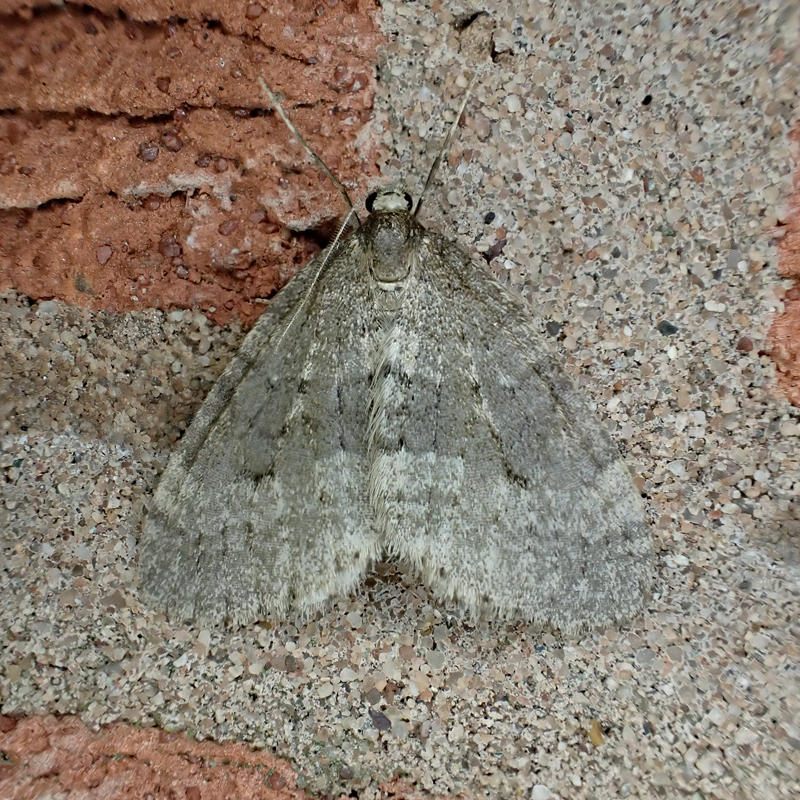

I always look forward to recording the first moth of the year at home; in many ways of course it is completely meaningless as the change from Dec 31st to Jan 1st is completely arbitrary in the context of the flight season of the moths that are likely to be around. It does seem to go one of two ways though: either the weather turns so cold that moths flying earlier in December have had their lot and sometimes it is late January before anything shows up, or the weather holds and so the first moths in January are the same as the last moths in the December. This year, here at least, is somewhere in the middle but a knackered Winter Moth is not quite as fulfilling as a fresh Early Moth, Pale Brindled Beauty or Dotted Border.

On Sunday I nipped over to Swithland Res in the mid-afternoon; I had intended for that to be a quiet and leisurely look at wildfowl and stuff, but it was actually a bit of a waste of time. Not sure if there was a particular steam engine of interest on the Great Central Railway but there were a lot of people loitering around on the causeway with big lenses (and they were certainly not there for the masses of Mute Swans or Coots on the water), and also more people than I've seen for a long while along Kinchley Lane and at the dam including a family flying a drone along the dam wall and yoots in a car with massive exhausts and no silencers. I ditched the bins after watching a handful of Goldeneye and had a quick half-arsed look along the walls before sacking the whole thing off.
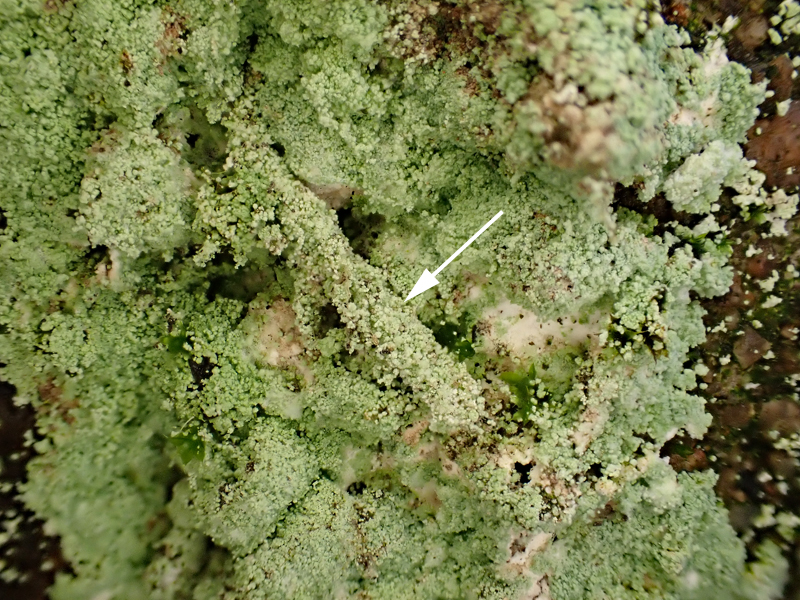
Infurcitinea argentimaculella - larval tube on granular lichen (honestly)
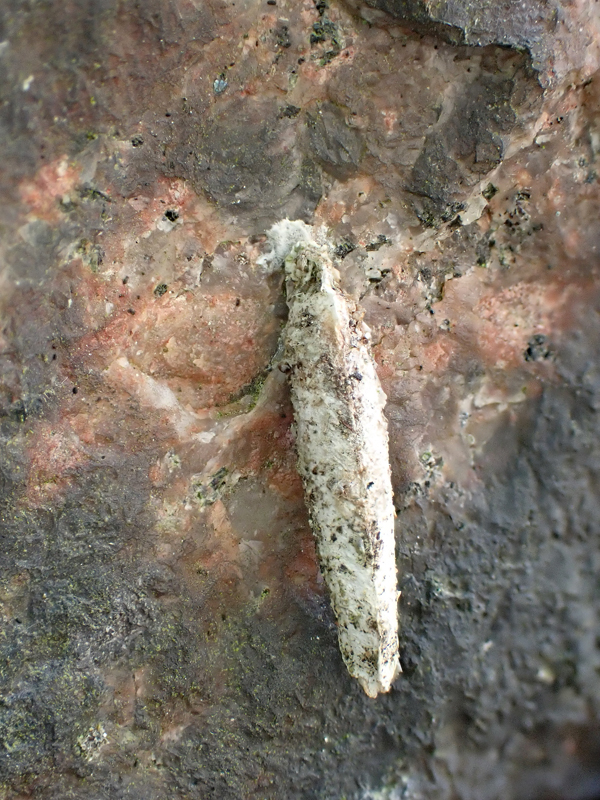
Taleporia tubulosa - larval case
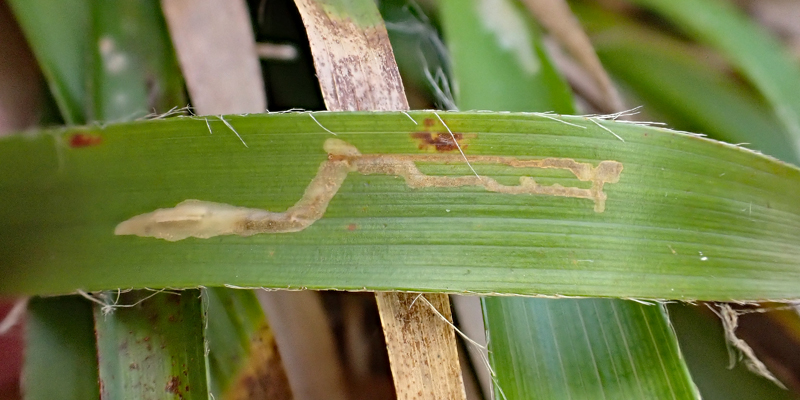
Elachista regificella - early tenanted mine on Great Wood-rush

And fresh in today, a trio of new books for the ever growing reference library:
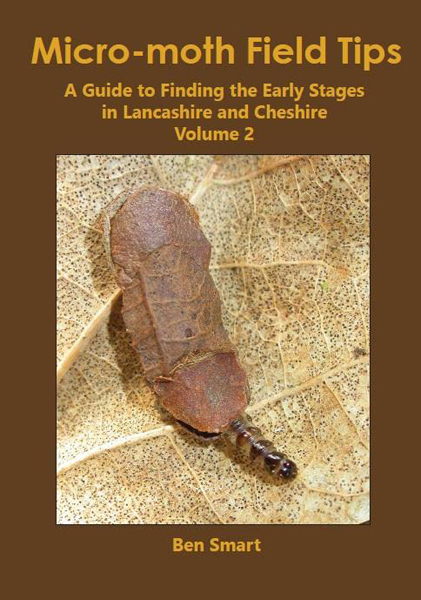
The first volume was excellent, trust this one will be too and seems so on first flick through.

One of these days I need to have a proper crack at rockpooling - this will certainly come in handy when I do, and looking through is a great motivator.
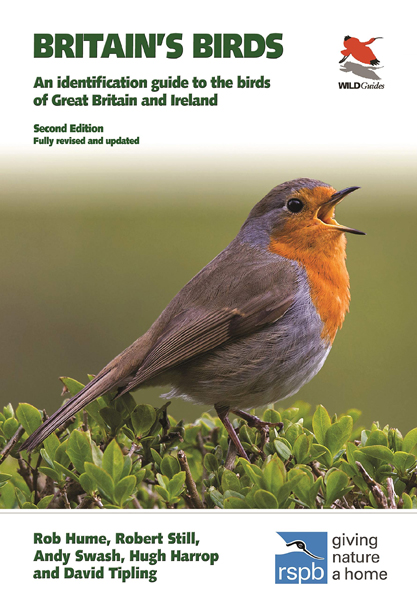
Okay, I will be honest and say I bought this on a whim. I don't really 'need' a bird guide as pretty much everything I encounter I've seen many times before or I know what it is anyway. Except immature gulls, which don't count. But, I realised, the main guide I have (Collins) is well outdated on systematics and doesn't include a lot of species that now 'exist'. My copy is from 1999 and I've not bought any general bird guide since then. This is the 2020 second edition with photo plates, and actually looks a very neat and useful guide for reference and it includes pretty much all recent rarities as well.

Here's a banging tune for you to sit back and soak up with your volume on loud ....

Sunday, 11 April 2021

Rushing

Yesterday I followed up on a tip-off from Graham Finch and headed out to look for some larval life that would provide a lepidopteran tick. What I didn't realise until checking afterwards was that I was getting a vascular plant tick in the process. I headed out to Kinchley Lane that runs along the side of Swithland Reservoir, the site that I usually go and look for Psychidae early in the year.


See all that green stuff on the bank around the birch trees and at the base of the wall, well it's not just grass - it's Great Wood-rush. Clearly I have seen this many times whilst on that lane, but I've never taken any notice of it and it wasn't on my list. Here's some shots of the general appearance, hairy-edged wide leaves (for a wood-rush) and flower spike ....


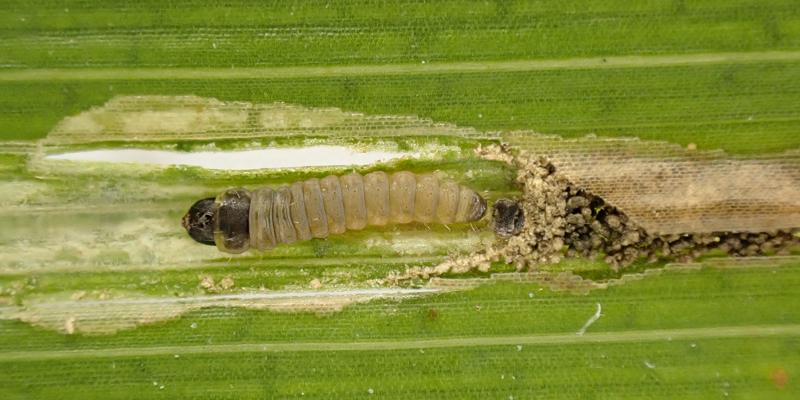
Anyway, what I was looking for on this plant was leaf mines like this one ....


A creased blister causing the leaf to fold in on itself on older mines. I found a few, and collected what I thought was two tenanted mines and one old vacated mine ....
It was then that I noticed that what I thought was an older mine was going in the opposite direction to the others: this one had a frass collection nearer to the tip of the leaf with the mine heading basally. And, despite appearances all three mines were tenanted.


I needed to open the mines to check the larva to be sure on the ID. This larva was clearly not impressed as it constantly shuffled up and down the leaf so I had to whack up the ISO to get a clear enough shot.


So, mines on Great Wood-rush tenanted by a greenish larva with a brown head and prothoracic plate which is darker at the outer margins (as opposed to whitish-grey with black prothoracic plate) confirm this is Elachista regificella (and not Elachista gleichenella which may also mine this plant). Sweet. Highly unlikely that I'll get one reared through but it has to be worth sweeping the plants in late June - mid July. Great Wood-rush seems to be localised in VC55, mainly around the Charnwood area including Swithland Wood.

Whilst I was there I had a quick look for Psychidae. Every year there seem to be fewer cases, or perhaps my eyesight is getting crapper.


A couple of Dahlica sp. above (probably D. lichenella based on size and lack of obvious insect fragments), Narycia duplicella below.


I also found a few Dyseriocrania subpurpurella loafing about including this pair in-cop.


And there were loads of Alder Flies, none of which I bothered collecting to check exactly which one.


It was pretty nippy whilst I was out and certainly not inspiring enough to spend a lot of time looking around. I headed to Ulverscroft to have another look at the Infucitinea argentimaculella colony, and found absolutely loads of tubes. None that I collected last year were successful, so I think his year I'll go and collect a few in late June by which time they'll have pupated.


Friday, 6 March 2020

A Tenuous Case

I made use of a couple of free hours this afternoon. First off, I headed to Swithland Reservoir in glorious sunshine. I'd only just got out of the car when I noticed a few ducks close to the dam by the overflow, including two of my favourite species beginning with G ....


Gadwalls were preening and having a drink in between bouts of courtship ...

No such luck for this lone drake Goldeneye.

After grabbing a few snaps, I set about my main purpose. Staring at walls. It didn't take long to find the expected Psychidae.

Luffia lapidella f. ferchaultella

Dahlica sp. - found a good number of cases in a slightly different section of the boundary wall to where I usually look. All looked to be D. lichenella, no potential D. triquetrella.


I noticed one moving about, surprisingly. They overwinter as full-fed larvae and should be pupating by now. When I got my hand lens out to have a good look at this one I noticed something else very close by .....

Bristly Millipede - never ceases to amaze me how these are invisible when you are actually looking for them.

Whilst I was enjoying these wall-dwellers, they were not what I was actually looking for. News came through during the week that Keith Tailby and Mark Hammond had found putative silk-tube cases of Infurcitinea argentimaculella. The photos seemed compelling, if a little inconspicuous. They'd been found at Ulverscroft and along the Swithland Res walls, but I was seeing nothing. After a quick call to Keith, I decided to head over to Ulverscoft and try there.


I was soon looking at a much more promising habitat, with the dry stone wall covered in a powdery blue-grey lichen (Lepraria sp.). If you think looking for larval cases of Psychidae is tenuous, you ought to try this .....


This is likely to overwinter as a small larva, but should be starting to become active again in spring, so it seems likely that bigger cases are old and vacated. I've collected a couple to have a look at, but definitely this is one to make an effort to return to in a couple of months. With lichens generally doing better now, and with eg the spread of lichen-feeding footmen spp., seems likely that this has also done well in the last decade or so and could well be wide-spread. After all, even when it's on your radar (which it wasn't) it is not exactly jumping out at you!

Just before getting back in the car, I had a quick look at the outer wall and quickly found more Psychids.


Narycia duplicella

Thursday, 28 March 2019

Being Birched

Way back on 25/03/2005 I'd headed over to Kinchley Lane that runs between Swithland Reservoir and Buddon Wood (a reminder again for the birders, it's where that Crag Martin was in 1999). Whilst there I managed to net two Eriocraniids - neither of which looked right for Dyseriocrania subpurpurella and both of which looked interesting. Turned out I was a very lucky man indeed; one was Eriocrania cicatricella, the other was Eriocrania unimaculella and both were confirmed firsts for VC55. Both feed on birch, of which there is plenty available. I managed to net a single E. cicatricella the following year, but have failed to produce any more records of either since.

Eriocrania cicatricella - Kinchley Lane 25/03/2005

Eriocrania unimaculella - Kinchley Lane 25/03/2005

Today I headed over there again for a bit of fresh air and sunshine whilst mooching about. Almost immediately after getting out of the car, I picked up a couple of Orange Underwings with my bins - no chance of one coming close enough to be netted ot photographed. Ravens were cronking, Great Spots calling and Chiffchaffs singing, all adding to the very welcome springtime ambience.

Soon afterwards I noticed a couple of butterflies nectaring on catkins, but both were backlit so I thought I'd get a couple of shots to see how they turned out.

Comma

Peacock

Just after taking these shots, I noticed a golden Eriocraniid on a dead oak twig just under my nose. That's just about the same time that I realised I'd made a schoolboy error ... camera battery died. I'm so used to it lasting for ages that I'd not checked if it needed charging after use yesterday. Arse. So I duly potted the moth, and as I did so I noticed a darker individual on the wall and potted that too. And I then failed to find any more over the next hour or so that I was there. I found a few bits on the walls, like Bristly Millipedes, Taleporia tubulosa, a couple of beetles to check and (oddly) a Saucer Bug. But with the camera dead there are no shots.

I did point my phone at the lane and the birches though, but I managed to screw that up too as the phone camera was set to some odd 'full screen' mode that meant the photos are an odd ratio. Still I quite liked them so some got cropped and some are almost 2:1. Something oddly nice about a birch woodland I reckon.


Later this afternoon, after the camera had been charged up, I grabbed a couple of quick snaps of the two Eriocraniids that I potted up. I'm certain one is just Dyseriocrania subpurpurella (there are a few oaks dotted amongst the birches) but the other is definitely a different species, slightly bigger and looks a good contender for Eriocrania semipurpurella which I've not seen before. One for the chop.

Dyseriocrania subpurpurella - 28/03/2019

Eriocrania semipurpurella? - 28/03/2019