Birds, Leps, Observations & Generalities - the images and ramblings of Mark Skevington. Sometimes.
Showing posts with label Zomboy. Show all posts

Sunday, 22 January 2023

Life in the land of the dead

Been far too busy/lazy of late to post, mainly because I've been far too busy/lazy to have anything to post about. This weekend for instance, the first weekend for a while where the conditions have been crisp and cold rather than miserably wet, I could have sauntered literally a couple of miles down the road to look for an over-wintering Yellow-browed Warbler (not Hume's) with a Hen Harrier loitering around the same area. Could not be arsed. Absolutely no motivation to get some boots on. It can't go on like this of course, and I'm sure a glimmer of lengthening days and increased opportunities will coax me out of this winter malaise.

I did have a minor effort today though, just by sticking the camera in the car to take on a short errand to stock up on fat balls. I dropped past the old churchyard in Blaby and had a nose around on the stone walls and gravestones for half an hour which turned out to be surprisingly productive.

For some reason I'd never seen Juniper Shieldbug, but here there were six brazenly sitting out on top of gravestones despite the temps barely being a couple of degrees above freezing. Pretty sure no Juniper anywhere around, but certainly some Lawson's Cypress or cultivars.

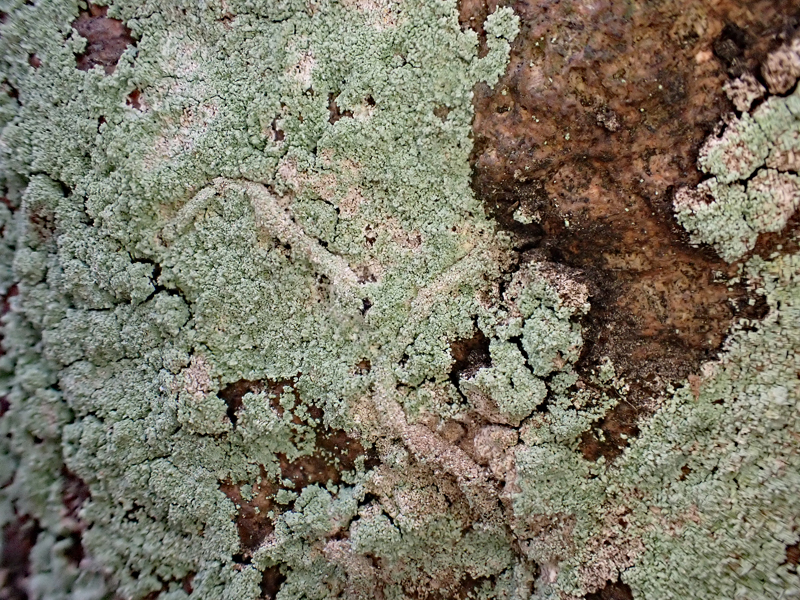
A search of the stone walls around the church and algae/lichen covered brick walls on the adjacent lane soon revealed a number of Psychidae cases. Narycia duplicella and Luffia lapidella (f. ferchaultella) were certain, but a few cases looked a bit more Dahlica-like. I'll go back and have a longer better look another time. But even better, a patch of granular grey-green lichen [Lepraria sp.] held the inconspicuous larval tubes of Infurcitinea argentimaculella. Good to find this well away from all other VC55 records to date (Charnwood). The photos are not exactly exciting, and these were on the shaded side of the wall in what were already dull conditions so a bit 'fuzzy'! Still you get the gist.
Here's an absolute racket that I recommend you play at ear-bleeding volume; its enough to wake the dead.

Saturday, 6 June 2020

Dip It

Yesterday evening, after posting, the skies had brightened up and the sun came out for a bit. Having reminded myself about the pond-dipping net I decided to nip out for a dry (but actually wet) run. I went to the pond at Huncote Embankment for an hour or so. Absolutely zero beetles, but the activity was very therapeutic and peaceful .... and rewarding. The net I bought is only a small one from NHBS, about 24mm square and 30mm deep with a telescopic aluminium handle. I took a small white tray, but aside from a few pots and camera nothing else. The tray was fine, but next time I need to take some sort of small hand-towel and some more suitable jars for anything that needs taking for checking out. As you can see (just about), aside from a couple of Great Pond Snails I managed to net a variety of bits. I ignored the fish, though I need to have a better look at these and see if I can rustle up Ten-spined Stickleback. The same photo more closely cropped shows a few bits numbered so you get some sense of scale:


1. Damselfly larvae

Or at least I think it is a damselfly based on the external 'gills' at the back end, but no idea which species. There should be three of those gills, but all the ones I netted had two which may be relevant.

2. Backswimmers
3. Mayfly larvae
There are four UK backswimmer species [Notonectidae], but all the ones I netted were nymphs so no ID for these. Pretty sure that the mayfly larva is a Pond Olive [Cloeon dipterum] as the tail filaments are about equal length with a dark median band and more than five rings between it and the base.

4. Water-louse

This one is a Two-spotted Water Hog-louse [Asellus aquaticus].

5. Valve Snail [Valvata piscinalis]
6. Common Bithynia [Bithynia tentaculata]

From here on the stuff was a bit more obscure!

7. Flatworm

This obscure blob was c15mm and round-headed when out-stretched, about half the size when blobbed up. Very slow moving and nothing like a leech. I've got this to Dugesia polychroa.

8. Leech


Not the big snail, but both of those had one of these riding their shells. A good look at the eyes, along with the general shape and colouration, makes it Glossiphonia heteroclita. There are actually three pairs of eyes but this is only apparent when it stretches to move around in typical leech fashion. Here's a couple of closer shots, though the one showing the eye arrangement when stretched is a bit off-focus as it was moving.


9. 'Shrimp'


A bit strange the way these moved as they were upright as they scuttled about. Anyway I got one under the microscope to check some features, and I've convinced myself that this is Crangonyx pseudogracilis.

Serrated hind-edge to pereopods
Free of dorsal spines or setae
(Just about visible) cleft telson

Not a bad effort really, and I'm looking forward to having a good poke around in more suitable location. It's just as well that I nipped out yesterday though as today has been proper miserable with some heavy thundery showers and a bit of hai with brief bright interludes.

Thursday, 9 January 2020

Many Micros

During 2019, a relatively new moth recorder in the north-east of Leics. set out to add lots of dots to the VC55 map. He did an incredibly fantastic job of it, running traps throughout the year spread out across the region, plus checking leaf-mines, adding dots to many previously innaccessible and/or underrecorded tetrads. Inevitably during this process he came across a lot of micros that were not immediately identifiable to him, and some these were collected and labelled for future scrutiny. I say some, but I think there are a good couple of 100 or more. Anyway, I offered to have a go at picking out anything identifiable without gen det, and segregating others for priority gen det. That was right at the end of November, and I knew it would not be something I could pick up immediately. As it happens, with the family break at Centreparcs the start of December, work commitments and Christmas they've been sat on my desk awaiting attention.

The main problem with these is going to be that they've been saved in small paper parcels, and some have more than one specimen inside. And I've got three plastic tubs full of them. I'm going to delve in this weekend and make a start; it will be interesting to see what's in there!


Anyway, whilst doing that I will be continuing to cause myself hearing damage with more of this type stuff what I have been listening to this week: