Birds, Leps, Observations & Generalities - the images and ramblings of Mark Skevington. Sometimes.
Showing posts with label Croft Hill. Show all posts

Saturday, 21 May 2022

Let Me Down

So as some may have picked up from posts on Twitter and Facebook, or my comment on the last post, my planned surgery did not happen. Which was bloody frustrating to say the least, and left me feeling a bit bewildered after having got myself psyched up and ready. I'd spent a couple of hours in the surgery pre-prep area being checked, interrogated and having had a chat with the surgeon - during which he helpfully told me that my pre-op scans had shown that the x3 growths had indeed grown a bit more during the c4wks since the last scans. The op is very high risk, mainly due to excess bleeding, sepsis, possible damage caused by the surgery etc, so they absolutely know I will be in ICU for a couple of days. The op is also a long procedure, at least 8hrs. So to go ahead, the team of surgeons/consultants involved (there are four completing various parts of the surgery within their area of specialism) all need to be available, the theatre needs to be triple-booked for the longer time, and there needs to be a confirmed ICU bed available. They can plan the surgeons and theatre, ICU is completely down to chance and given that the hospital has the only A&E department in Leics. then it is always likely to be busy. So I was left thinking the worst - what if the next date is another six or seven week wait, will that be too late to have the best chance of success ....

Once I'd had something to eat and drink, and pottered in the garden sunshine, I pulled myself together enough to nip out for a brief walk at Croft Hill. Whilst out I remembered that I had a ticket to see Gary Numan that I'd obviously expected to miss and had not been able to pass on. So when I got home I decided to sort myself out, get the moth trap set and bugger off for a beer and some noise. A great gig, and complete contrast to the more sedate and intricate Divine Comedy gig I'd been to the previous weekend.

Anyway, I got a call from the hospital yesterday and have a new date - 15th June. Not as soon as I'd like but at least not as far off as I feared. I'm back to how I was before this debacle and just focussing on the now, including getting back to work after a week out.

The moth trap on Thursday night was fairly busy, but best of the bunch was a not particularly spectacular looking pug ....

Angle-barred Pug (f. fraxinata = Ash Pug)

I nearly overlooked this in the early morning light, but noticed the straight costa, narrow long-winged look and that the weak markings were a bit too uniform to be due to wear. Of course in decent light and with a fully awake mind it's obvious what it is - though I wonder if I've overlooked it in the past. A first for the garden and the first I've seen in VC55, having only seen it previously in Devon.

A few others from the trap ...

Oak Hook-tip

Lime Hawk-moth

Flame Carpet

I pointed the camera at a couple of bits up at Croft Hill too. Back on 12th May whilst unsuccessfully dangling lures I found a handful of first instar larvae on small Aspen saplings. I was sure they were Puss Moth, but had no camera and wasn't going to take a couple to rear knowing I'd be away for a while. So I had another look and very quickly found another handful on the same area of Aspen saplings (there are loads), now in what I think is early third instar. This seems very early, but would mean the eggs were laid in late April and over the last five years at least we've been seeing Puss Moth adults to light from c20th April, so a clear shift in phenology.


There were plenty of Cantharids knocking about too, though only Cantharis rustica got snapped ....


The garden trap last night was not so busy, but the diversity is still picking up.

Rustic Shoulder-knot - a particularly dark individual

Brown Rustic

Poplar Grey

Given the move in surgery date, I'll also be able to go and see The Wonder Stuff in June - but I'll still be missing the Isle of Wight Festival.

Sunday, 14 November 2021

Island Life

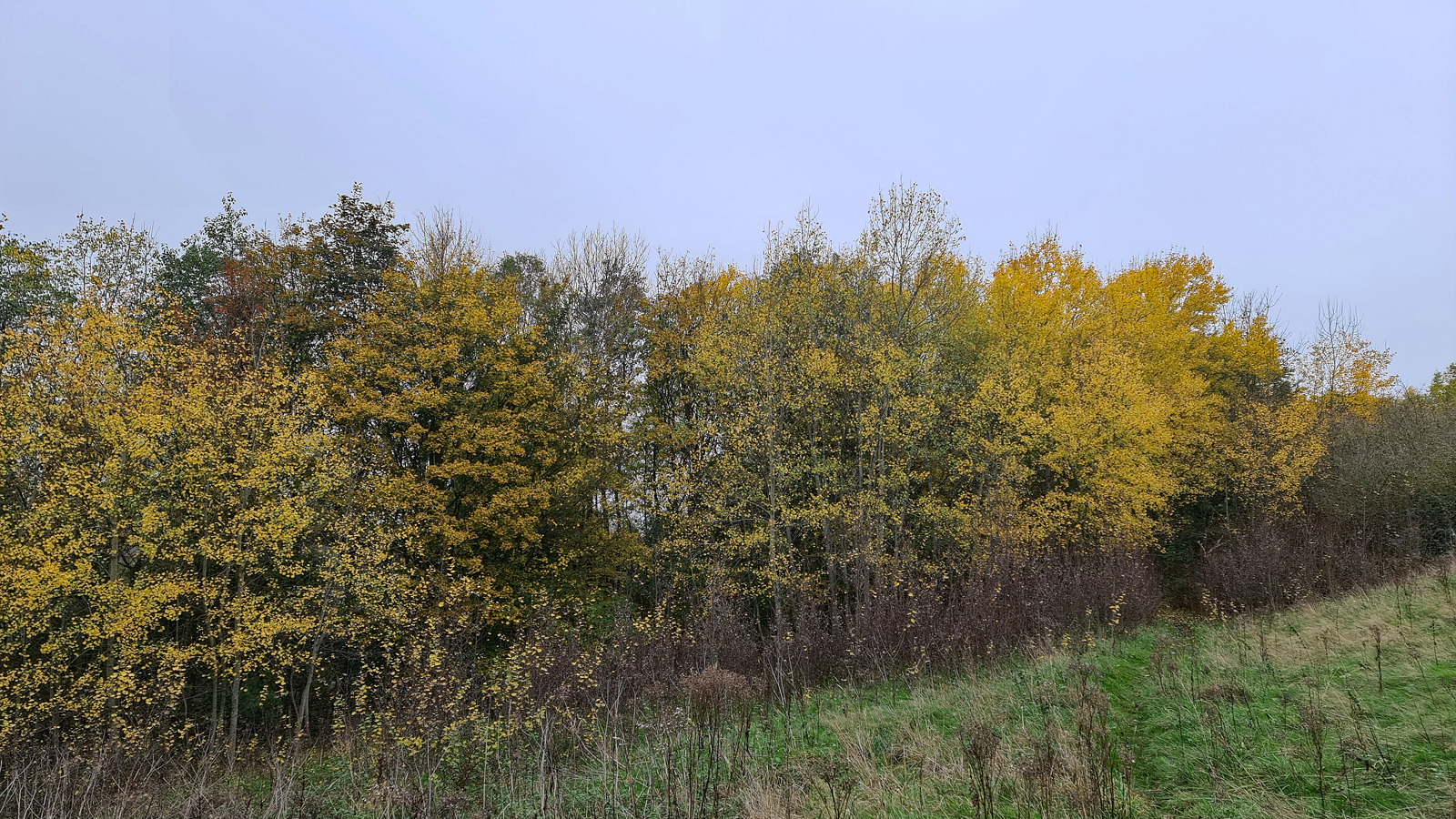
I nipped out today with a specific leafminer target. Given my rank amateur approach to leafmining, most of my finds have generally been a case of looking at and finding mines on whatever trees I come across and then trying to work out what they are - rather than looking for a specific target on a specific host. Anyway today, the host was Aspen. I nipped over to Croft Hill where there are a couple of decent stands, and noted that there were plenty of golden yellow leaves still on the trees ....


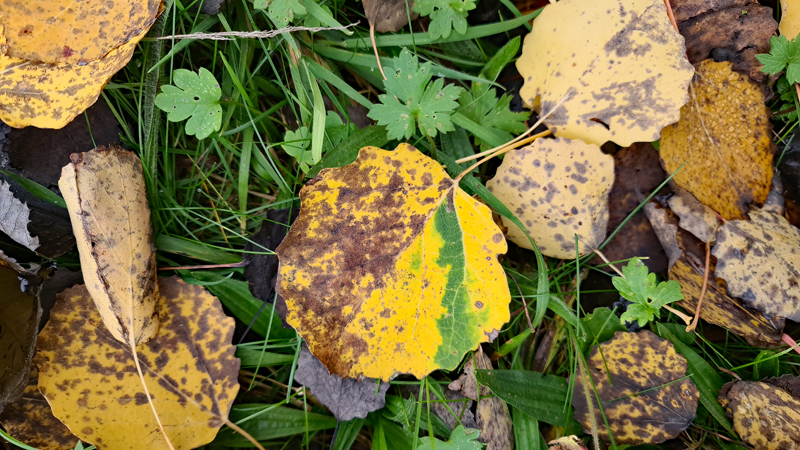
But actually, I had no intention of looking into the foliage. Instead, I was intent on looking through the masses of fallen leaves ....


It seemed like looking for a needle in a haystack initially, but I soon spotted what I was after ....


If you look carefully, you'll see that amongst the numerous yellowed leaves with signs of decay is one with a distinct green flush - a so-called green island. Before long I was finding lots of them.


What you may also have noticed on the above closer shots, at that right at the base of the green island, right between the mid-rib and a vein and into the petiole is a mine.


This is the mine of Ectoedemia argyropeza, and happily as you can hopefully see in the above at least one of the several leaves I brought home was tenanted. The early part of the mine actually causes a gall in the stem and petiole, and some of the mines that seemed to have been vacated may just have the larva in the petiole where they retreat in the day. Apparently.


This species is thought to be parthenogenetic in the UK, which perhaps explains the wholly daft vernacular 'Virgin Pygmy'.

As you can see here, I got lucky with one leaf having two mines.

There are some very complicated scientific explanations for how leafminer larvae create these green islands, which remain photosynthetically active, using bacteria. Like this one.

This is a new species for me. There are very similar mines to look for created by closely related Ectoedemia spp. on hybrid Black Poplar (E. hannoverella, no VC55 records) and on either White Poplar & Grey Poplar (E. turbidella, one VC55 record of a gen detted adult to light).

Thursday, 1 April 2021

Smell of Female

My lack of posting over the last few days is down to not having enough time to keep up and catch a breath, with a fair bit of proper paid work done in between bouts of activity out in the warm sunny couple of days we had. I've got more to write about than I can manage in one post, although most of it is not as illustrated as the mothy stuff so I'll focus on that for now.

I mentioned pheromone lures; sure enough they arrived on Tuesday although not until well past the optimum time of day to be trying them out but I was keen to give them a go.

Pheromone lures for Grapholita molesta (MOL) and Grapholita lobarzewskii (SKI) - both of which have been successful in attracting other tortrix spp. I'm unlikely to record G. molesta at all, but G. lobarzewskii may well turn up again later in the year.

After a few minutes unpackaging and working out how to assemble the trap I bought (rather than dangling in a bag like I usually do) I wanted to head out somewhere that I could have a reasonable chance of recording my target species Pammene giganteana. I always feel better about lures when I've proven they work! Prior to this year there were just three VC55 records including one we had at Grange Wood in 2018. All records were of odd individuals to light in decent woodland, but recent developments with the lures has shown this to be a much commoner species than was thought so anywhere with a decent stand of oaks should be in with a chance. So I headed to Croft Hill where there are a good number of mature oaks on one side of the hill.


By the time I was there is was getting on for 16:25. I got the trap hung up with the MOL lure and stood back wondering if I'd be in luck. Didn't take long to find out - after a couple of minutes the smell of female must have been overwhelming and at least two were flitting about the trap and ended up in it.


I potted one up for a photo and took the trap down - no point trying to catch as many as possible, once it's proven to be there that's good enough.

Pammene giganteana - Croft Hill 30/03/2021

I then headed closer to home to try some of the oaks in the square. Oak is not exactly abundant in the square, and whilst there are a few accessible trees, none of them are close together which I suspect makes a difference. I had no luck, and tried again on Weds again with no luck despite being earlier in the day.

A couple of smallish oaks on the main A426.

A slightly bigger oak at the end of the lane, right on the boundary of my square.

Probably the biggest accessible oak in the square, on the edge of the estate near the Dog and Gun pub.

Earlier on Weds I tried at Bouskell Park in Blaby, and had another instant response with at least 10 arriving within five mins by a group of large oaks around the ice-house pond.


Pammene giganteana - Bouskell Park 31/03/2021

Whilst trying the local oaks without success, I did manage to jam another species for the square list with a different micro flitting about in the sunshine ...

Dyseriocrania subpurpurella - Whetstone 31/03/2021

With the increased daytime temps, and ovenight temps keeping up in the high singles, the garden trap also picked up in the last couple of nights with a few NFY including ....

Pale Pinion

March Moth

Oak Nycteoline

Early Thorn

I also pointed the camera last night at a couple of bits on the sheet that I stand my garden trap on ....

Nicrophorus humator

Pill Woodlouse [Armadillidium vulgare]

I've left the trap off tonight as it has cooled down a lot so unlikely to be missing much.

Friday, 18 September 2020

Bumps, Balls and Blisters

 In lieu of anything more exciting, here's some galls from Croft Hill on Monday .....


This is the reddened upperside and distinctly unpleasant looking underside of a pear leaf galled by the fungi Gymnosporangium sabinae, commonly known as Pear Rust. This is one that requires two hosts to complete a cycle: a summer form that mainly affects pear, and a winter form that affects Juniper. There are four Gymnosporangium spp. that require Juniper plus secondary hosts. This one on Pear is quite common in VC55, Gymnosporangium clavariiforme (Tongues of Fire) which uses hawthorn is much less common. This is certainly due to the Juniper involved: G. clavariiforme needs Wild Juniper (Juniperus communis) which is pretty much non-existant in VC55 apart from a couple of sites where it has been planted. G. sabinae used a cultivated Junipers, such as Juniperus sabinae - clearly more of that around.

The next two galls are caused by wasps, and both are on Quercus sp. oaks:


This is a asexual generation gall of Neuroterus albipes. Quite different from the more usual 'spangle' galls caused by other Neuroterus spp. as they are a lot smoother.


And these are the asexual generation galls of Andricus lignicola, generally known as Cola Nut Galls. I'm not sure if this is because they are meant to resemble Kola Nuts, or because they taste like the 'cola' flavour from the nuts. I didn't fancy testing the latter theory, at least not without a dark rum to mix it with.

Galls are cool, uh?

Monday, 14 September 2020

Emerald Ivy

I've had a bit of a weird day; a couple of slots of targeted searching for inverted life after an ultimatum that I've been fearing and expecting in equal measure. I won't go into details now; I've got to spend some time getting my head around the options, impacts, risks, for and against. I am actually off work this week, I'd booked it off a while ago and I will need to spend some time clearing the shed etc but - as today - hope to get out for a bit which will at least help me clear my head.

The first trip late this morning was out to Eyebrook Reservoir, with Nichola coming along for the ride. I had no intention of searching around the water for bird life, I just needed to stand at this bridge and stare intently ....


As you can see, there is a large willow overhanging the relatively still inflow to the reservoir. You can probably guess from that what I was looking for, but seeing them with bins was a lot easier than getting photos - there was just enough heat and sun to keep them active and just enough wind that whenever they settled they were moving anyway. Still, I got shots that are at least good enough to show the key diagnostic feature ....

Willow Emerald Damselfly - showing pale yellow pterostigma

This was first recorded in VC55 last year, at the same site and also somewhere around the Watermead complex. It's become clear this year that it has spread a little further, but not having seen them at all I wanted to go to a known site and get my eye in. They barely strayed from the willow, although I did see one on bank-side vegetation on the other side of the bridge. I saw two pairs in-cop and three singles during the half an hour that we were there.

After a nice lunch at our local farm shop cafe (nice that it is back open), I headed over to Croft Quarry with another target in mind. This site is excellent for solitary bees, their cleptoparasites and predatory wasps. So, I figured, this could be as good a site as any to look for Ivy Bee - as long as there was some decent stands of ivy around the hill which I could not recall seeing. I had a good walk around the perimeter of the hill but no ivy noted. Of course I took the opportunity instead to look for leaf mines and galls which will have to wait for another day. I knew there would be ivy along the roadside path and so headed along there in the hope that any foraging bees might venture that far.


Every bit of flowering ivy was busy along here in the full sun. Lots of yellowy-black insects, as expected ....


After noting plenty of Vespa spp. wasps, Honey-bees and various Syrphidae, I eventually reached a gateway the leads back out onto the road. Literally. The walls on either side of the gateway were smothered with more ivy than I'd seen anywhere else around the site.


As you can see, I've  taken these shots from the pavement on the opposite side of the road. To be able to look at this ivy required standing in the roadway between two blind corners in the path of oncoming traffic. This is not an major A road or anything like it, but busy enough!


Look left, look right. As it happened, whilst putting myself in the path of various sized and speed vehicles, I saw a number of these ....

Ivy Bee

This is another species that is only recently arrived in VC55 and is starting to spread, first seen in 2017.

Meanwhile, that decision won't make itself but I've got a few days to think. One more day won't hurt, and the tone of this suits my mood perfectly ....